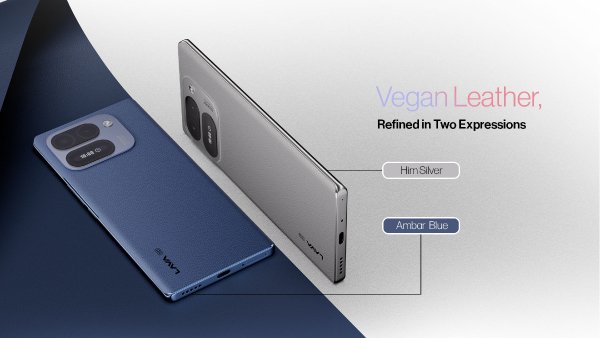
Vivo has officially pulled back the curtain on the Vivo V80, introducing substantial hardware revisions to its upper mid-range lineup. The handset marks a notable shift in the series, merging materials science innovations with imaging features typically reserved for higher-tier flagship devices. Anchored by a unified cold-carved glass chassis, high-grade ingress protection, and a dense silicon-anode battery, the V80 targets mobile photographers looking for periscope telephoto performance at an accessible price point.
Also Read: Vivo Launches S2 FE in India With Giant 10,000mAh Battery
Announcement Highlights:
- Flagship One-Piece Cold-Carved Glass construction with aerospace-grade metal frame
- Dual 50MP ZEISS optics pairing a 1/1.56-inch main sensor with a 73mm periscope telephoto lens
- Heavy-duty durability certifications including Swiss SGS drop resistance, IP68, and IP69 ratings
- High-capacity 7,200mAh BlueVolt battery paired with OriginOS 7
- International pricing confirmed at approximately ₹54,999 (~$650 / €580)
Cold-Carved Glass Architecture and Nano-Lithography Aesthetics
The external design of the Vivo V80 departs from conventional sandwich constructions. Vivo utilizes a one-piece cold-carved glass process where the rear shell and the raised floating camera module are milled from a single unbroken slab of glass. This engineering technique avoids structural weak points found in hot-bent glass, strengthening the structural envelope around the rear camera lenses against drop impacts.
Durability receives equal priority. The front display incorporates impact-resistant glass co-developed with German specialty glassmaker SCHOTT, mounted onto an aerospace-grade alloy chassis. The chassis carries both IP68 immersion and IP69 high-pressure steam-wash ratings, backed by a Swiss SGS drop-resistance certification. The flagship finish, Starwish Purple, uses laser holographic lithography. Vivo etched more than 3,600 individual 4K-resolution graphics at the nanoscale directly onto the inner substrate over a two-year development cycle, creating true spatial depth that shifts under incident light. Additional colorways include Wander Green, Sunrise Anthem, and Vast Gray.
ZEISS Optics: 50MP Periscope Telephoto and Portrait Tuning
Imaging remains the central pillar of the V-series identity. Co-engineered with optics firm ZEISS, the Vivo V80 features a primary 50-megapixel camera powered by a 1/1.56-inch image sensor behind a 23mm equivalent f/1.9 lens. The headline hardware inclusion is a 50-megapixel periscope telephoto camera built around a 1/1.95-inch sensor and a 73mm equivalent focal length. Both cameras support optical image stabilization and allow full 4K recording at 60 frames per second.

On the software processing side, the V80 integrates ZEISS Center-Stage Portrait modes. These algorithms emulate vintage mechanical prime lenses, offering a dedicated 85mm Sonnar profile and a 100mm Planar portrait simulation with low-saturation tones and signature background falloff. The secondary ultrawide lens takes a pragmatic step back, utilizing an 8-megapixel sensor with a 115-degree field of view suited for casual landscape capture.
Display Luminance, BlueVolt Silicon-Carbon Battery, and OriginOS 7
Up front, the Vivo V80 features a 6.59-inch AMOLED display. The panel achieves a full-screen brightness of 1,800 nits, pushing up to 5,000 nits peak brightness in localized high-dynamic-range scenarios. This ensures clear legibility in high ambient lighting.
Power delivery is handled by a 7,200mAh BlueVolt battery. By using high-density silicon-carbon cell chemistry, Vivo crammed an oversized cell into a slender profile without adding noticeable bulk. The phone debuts with OriginOS 7, a customized operating system that includes upgraded on-device artificial intelligence workflow tools, unified cross-device continuity protocols, and architectural memory defragmentation designed to sustain performance across a 72-month period.
Hardware Comparison: Vivo V80 vs Vivo V70
The changes between generations center on chassis durability, optical zoom integration, and substantial battery capacity upgrades.
| Hardware Specification | Vivo V80 | Vivo V70 |
|---|---|---|
| Rear Camera System | 50MP Main (1/1.56-inch) + 50MP Periscope Telephoto (73mm) + 8MP Ultrawide | 50MP Main + 50MP Standard 2x Telephoto + 8MP Ultrawide |
| Chassis Materials | One-Piece Cold-Carved Glass, SCHOTT Screen Shield | Standard Curved Back Glass, Standard Tempered Front Glass |
| Battery Capacity | 7,200mAh BlueVolt (Silicon-Carbon) | 5,500mAh Lithium-Ion |
| Ingress Protection | IP68 and IP69 | IP68 Only |
| Display Brightness | 1,800 nits full-screen (5,000 nits local peak) | 1,300 nits full-screen (4,500 nits local peak) |
| Operating System | OriginOS 7 (72-Month Performance Engine) | OriginOS 6 / Funtouch OS 15 |
| Base Retail Price | Starts around ₹54,999 (~$650 / €580) | Launched at ₹42,999 (~$520) |
Global Pricing Strategy and Expected Indian Launch Window
The Vivo V80 is rolling out initially across selected global markets with an official retail price set at approximately ₹54,999 (~$650 / €580). For the Indian market, where the Vivo V series represents the brand’s core revenue driver in the premium sub-flagship space, regulatory filings suggest a domestic launch will follow shortly. When the phone arrives in India via Flipkart, the official Vivo e-store, and major offline retail partner networks, domestic pricing is projected to hover between ₹49,999 and ₹54,999 depending on storage configurations.
By migrating high-pressure IP69 water resistance, a dedicated periscope portrait focal length, and a 7,200mAh battery cell down from its four-figure flagship portfolio, Vivo directly challenges rivals like the OnePlus 12R series, Oppo Reno lineup, and mid-tier Samsung Galaxy models. The V80 stakes its ground squarely on industrial design resilience and specialized portrait optics.