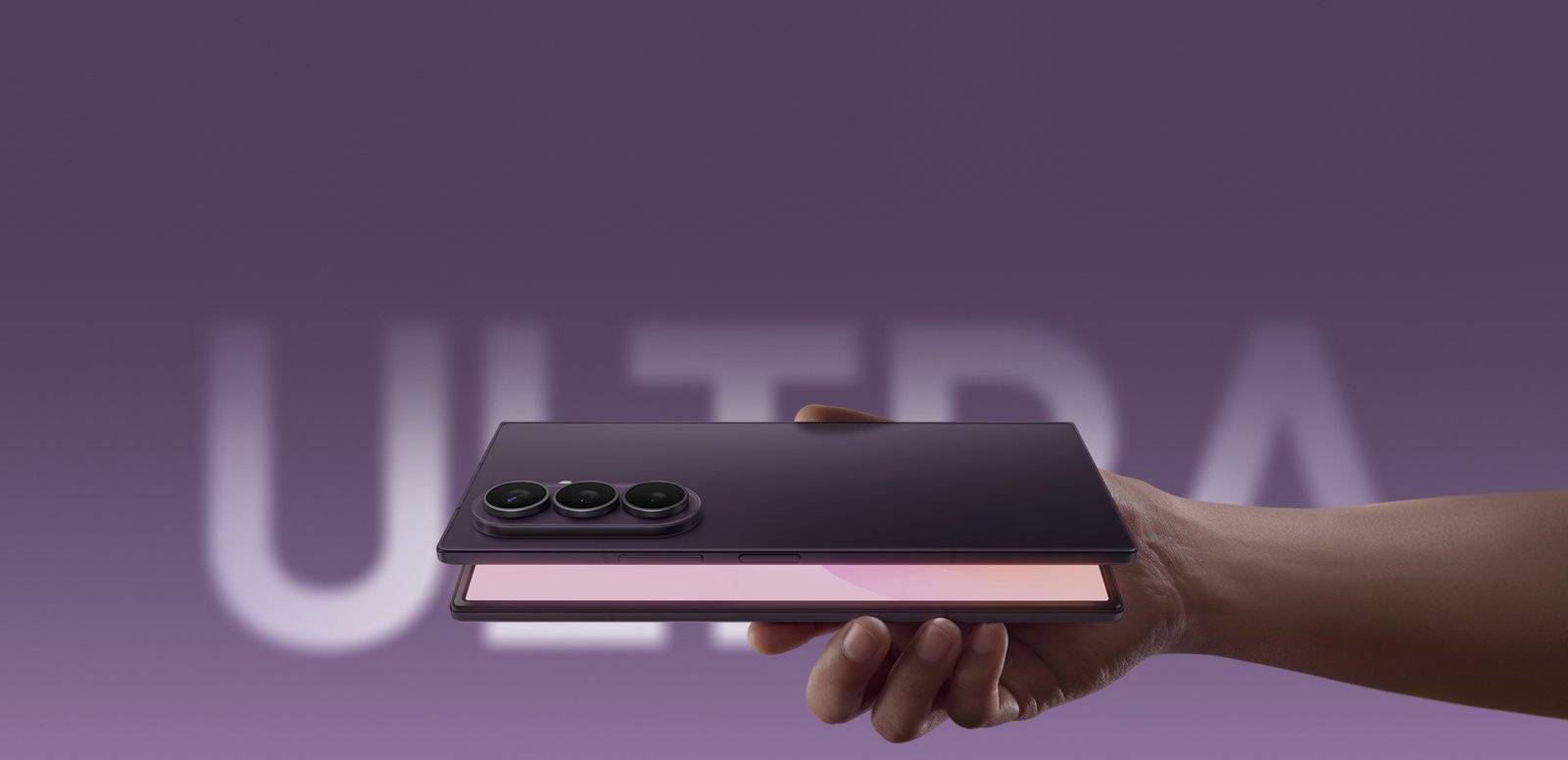
Oppo is expanding its mid-range smartphone strategy in India, following up the launch of its battery-focused K14 Lite with initial teaser details of the upcoming K14 Plus 5G. The brand is building a highly segmented family, ranging from budget models to premium mid-rangers, with the K14 Plus 5G positioned at the top of this hierarchy. Official teasers show a slim side profile with physical volume and power buttons, finished in dual-tone options including orange and dark grey. This design direction suggests Oppo is attempting to balance physical ergonomics with the large battery capacities that define the rest of the K14 lineup.
Technical Contrast of the K14 Series
To understand where the K14 Plus 5G fits, we must examine the architectural decisions of its sibling, the K14 Lite. The Lite model uses a Unisoc T7250 octa-core processor clocked at 1.8GHz, paired with 4GB of LPDDR4X RAM and 64GB of UFS 2.2 storage. It runs ColorOS 16 based on Android 16. The standout hardware choice is a massive 7,000mAh battery. However, to keep production costs low, Oppo limited charging speeds to 15W. This creates a charging bottleneck, taking 2 hours and 52 minutes to reach a full charge under test conditions. For thermal management, the Lite uses a 13,700mm² graphite cooling area to disperse heat from the Unisoc silicon.
The camera systems also highlight the entry-level nature of the Lite variant. It features a single 13MP rear camera with autofocus and a 5MP front camera. Oppo relies heavily on software processing to compensate for the basic hardware, using AI Eraser, AI Clear Face, and AI Smart Image Matting 2.0 to handle photo editing.
The upcoming K14 Plus 5G must pivot away from these entry-level compromises. Moving to a higher price bracket requires a modern mid-range 5G system-on-chip, likely from MediaTek’s Dimensity or Qualcomm’s Snapdragon lines, along with faster charging protocols to avoid the multi-hour charging times of the Lite model. To compete in the premium segment, the device must also transition to a high-resolution primary sensor, ideally a 50MP sensor with Optical Image Stabilization, alongside an ultra-wide lens.

Real-World Usability and Friction Points
The physical experience of the K14 Lite presents a clear dichotomy. The 7,000mAh cell offers exceptional longevity, providing nearly 27 hours of continuous YouTube playback or 13 hours of intensive gaming. The 6.75-inch HD+ LCD display has practical usability features like Splash Touch, Oily-Hand Touch, and Glove Touch, which adjust digitizer sensitivity to register inputs accurately under wet or challenging conditions. However, the 15W charging speed is a major point of daily friction. Waiting nearly three hours for a full charge forces users to rely on overnight charging routines.
For the upcoming K14 Plus 5G, Oppo must address this bottleneck. If the Plus model retains a large battery, integrating SuperVOOC flash charging is necessary to prevent the device from being tethered to a wall socket for hours. Additionally, the physical design teased by Oppo shows a slim chassis, which indicates a complex internal layout to prevent the device from feeling overly heavy in the hand during extended daily use.
Pricing Hierarchy and Market Strategy
The Indian mid-range smartphone market is highly contested, and Oppo is positioning the K14 series to cover multiple price points. The K14 Lite starts at ₹16,999, with launch offers bringing the effective price down to ₹15,999. Above this, the standard K14 starts at ₹25,999. The K14 Plus 5G is positioned to sit above both models, with an expected launch price of ₹30,000 or higher.
| Model | Starting Retail Price | Key Hardware Focus |
|---|---|---|
| Oppo K14 Lite | ₹16,999 ($205) | 7,000mAh battery, Unisoc T7250, 15W charging |
| Oppo K14 | ₹25,999 ($315) | Mid-range performance, standard battery |
| Oppo K14 Plus 5G | ₹30,000+ ($360+) (Estimated) | Slim 5G design, premium performance |
At this pricing level, the K14 Plus 5G will face direct competition from established premium mid-rangers like the OnePlus Nord series and iQOO Neo models. To justify the ₹30,000 price tag, Oppo cannot rely solely on battery capacity. The device will need a superior display, faster storage standards like UFS 3.1, and a much more capable camera system than the basic 13MP sensor found on the Lite variant.
The Road Ahead
The official teasers indicate that the launch of the Oppo K14 Plus 5G in India is imminent, with full hardware specifications and retail pricing expected in the coming weeks. The success of the device will depend entirely on whether Oppo pairs its slim design with competitive silicon and modern charging speeds.