Apple bypassed its usual incremental update cycle at the “Surprise and Shine” hardware event, introducing the iPhone 18 Pro and iPhone 18 Pro Max with foundational shifts in silicon architecture and optical engineering. The headliners of this generation are the transition to TSMC’s 2nm process node for the A20 Pro system-on-chip and the introduction of a physical, variable-aperture main camera.
While these additions represent the most significant hardware leap for the Pro lineup in years, early testing and benchmark evaluations show that Apple is still locked in a fierce engineering battle with Chinese rivals. The new hardware pushes mobile videography to television-grade limits, yet classic compromises in telephoto reach and thermal management under load remain part of the equation.
Two Nanometer Silicon and the Arrival of Vapour Chambers
The A20 Pro silicon powering the iPhone 18 Pro series represents the industry’s first commercial application of TSMC’s 2nm process technology. The chip configuration includes a six-core CPU and a seven-core GPU. By shrinking the transistors to the 2nm threshold, Apple claims substantial efficiency gains, enabling the standard Pro model to reach up to 24 hours of battery life, while the Pro Max extends to 30 hours. This silicon is paired with Apple’s first proprietary C2 modem, marking a major step in the company’s long-term goal to replace third-party wireless chips.
To combat the intense heat generated by high-performance 2nm processing, Apple has integrated a vapour chamber cooling system into the internal chassis of both Pro models. This is a vital hardware addition for users in warmer climates, such as the Indian subcontinent, where previous titanium iPhones suffered from aggressive thermal throttling during outdoor use or high-frame-rate video recording. This passive cooling system works alongside iOS 27 to maintain sustained performance during heavy processing tasks.
Variable Aperture Optics and the DxOMark Verdict
The main camera system now uses a 48-megapixel Fusion sensor equipped with a physical, six-blade variable aperture. This mechanical iris adjusts from f/1.48 to f/4.0, allowing photographers to control depth of field naturally rather than relying entirely on software-based portrait algorithms. The physical blades also assist in keeping multiple subjects sharp during group shots and managing light intake in extreme environments.

In analytical testing by camera evaluation platform DxOMark, the iPhone 18 Pro secured a second-place overall score of 172, trailing the Huawei Pura 80 Ultra by three points. Apple claimed the highest-ever low-light photography score of 150, thanks to the wide f/1.48 setting, which delivers sharp detail and controlled noise in near-dark conditions.
However, the evaluation exposed clear weaknesses. The 48-megapixel telephoto lens, capped at a 2x optical zoom level, scored 143 points, falling far behind the Oppo Find X9 Ultra’s score of 173. Testers also noted occasional white-balance shifts, lens flare, and slight exposure discrepancies between the live viewfinder preview and the final captured image.
Live Stadium Testing Over Private 5G
To demonstrate the real-world capabilities of the new camera system, Apple partnered with T-Mobile and Major League Baseball to broadcast a live game between the San Francisco Giants and the Los Angeles Dodgers using 14 iPhone 18 Pro devices. The production crew positioned eight iPhones in tight, high-impact locations throughout Dodger Stadium, including inside the pitch clock, behind the home plate backstop to capture 100 mph fastballs, and on the outfield foul poles.
These eight stationary devices streamed high-bitrate video directly to the broadcast control room over an isolated, private 5G network, bypassing the cellular congestion of 50,000 fans in the stands. The remaining six iPhones were operated handheld on the field, utilizing the variable aperture to adjust instantly as the stadium transitioned from natural twilight to harsh artificial floodlights. The broadcast proved that the phone’s 60fps video stabilization and real-time color processing could seamlessly blend with traditional multi-million dollar television cameras.
Premium Pricing Tiers and Production Realities
Apple is manufacturing a portion of the iPhone 18 Pro series locally in India to streamline its regional supply chain. Despite this domestic assembly push, import duties and local taxes keep the entry price high. The iPhone 18 Pro starts at ₹1,64,900 (~$1,199) for the base 256GB model, while the larger 6.9-inch iPhone 18 Pro Max starts at ₹1,79,900 (~$1,299) for the same storage configuration. Both models are also available in 512GB, 1TB, and 2TB capacities, finished in Black, Silver, Glacier, or Burgundy.
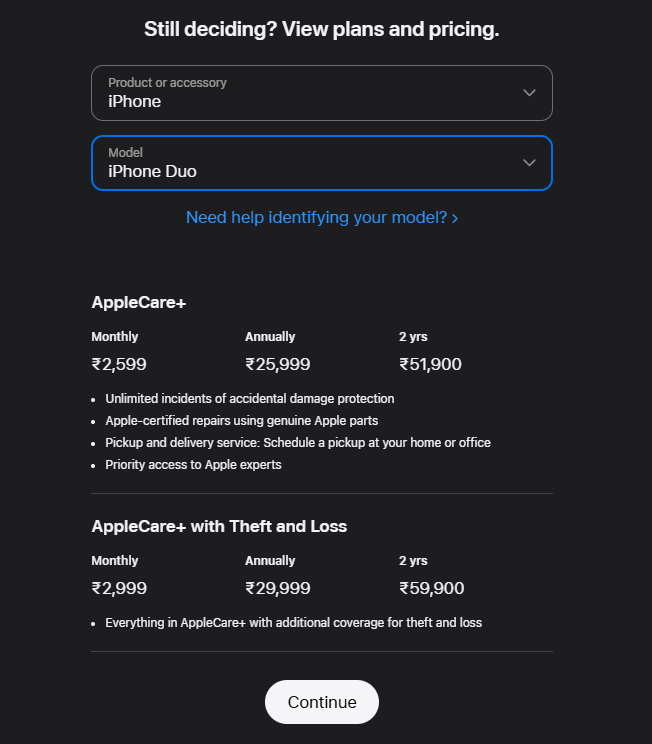
These pricing structures place the Pro series at the absolute peak of the premium segment, where they face direct competition from Samsung’s Ultra lineup and Google’s Pro devices. Retail sales for the iPhone 18 Pro and Pro Max began on September 18, 2026, while early adopters of Apple’s first foldable device, the iPhone Duo, must wait until October for pre-orders to commence.