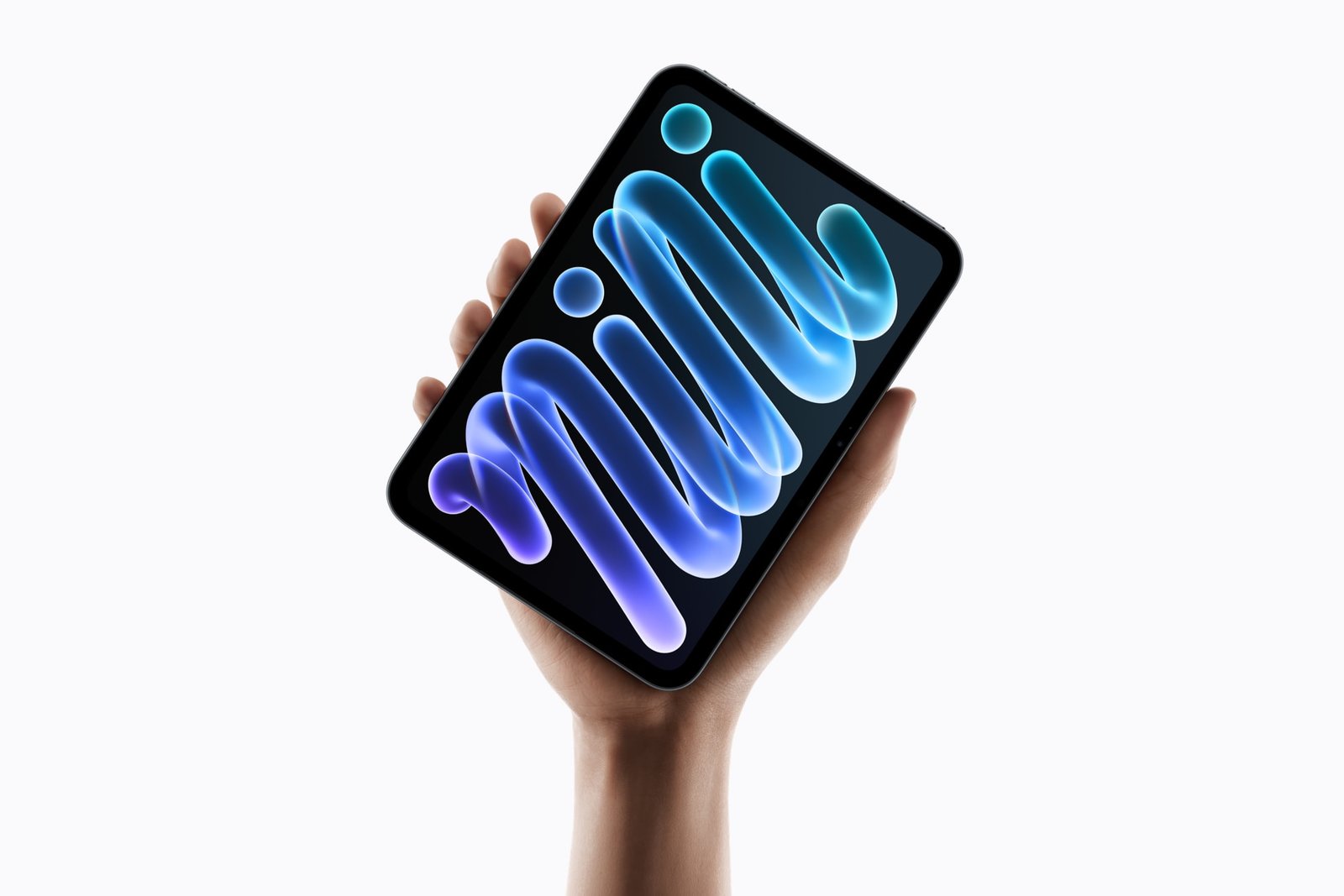
Apple officially unveiled the next-generation iPad mini, granting its most compact tablet a comprehensive hardware overhaul. The updated slate drops the aging LCD panel in favor of an 8.5-inch Super Retina XDR OLED display, slims the aluminum chassis down to 5.4mm, and adds certified IP67 water and dust resistance for the first time in the product line’s history. Running on the 2nm A20 Pro processor, the new tablet introduces substantial performance gains alongside custom wireless and cellular chips designed directly in Cupertino.
Also Read: Apple Unveils Redesigned iPad Mini With OLED and A20 Pro
Announcement Highlights:
- 8.5-inch Super Retina XDR OLED display with 1,200 nits peak brightness and optional nano-texture glass.
- 2nm A20 Pro processor paired with custom Apple N1 Wi-Fi 7 silicon and C2 5G modems.
- IP67-certified dust and water resistance paired with an internal Acoustic Display sound mechanism.
- Base configurations start at ₹82,900 ($699) with retail availability beginning November 6.
Super Retina XDR OLED and the Acoustic Display Architecture
The display serves as the focal point of the redesign. Apple replaced the prior 8.3-inch liquid crystal display with an 8.5-inch OLED screen, achieving a 2316 x 1512 resolution at 326 pixels per inch. Because the borders shrink by 24 percent, the overall physical footprint remains identical to the previous generation. The panel delivers a 2,000,000:1 contrast ratio, sustained full-screen brightness of 600 nits for SDR and HDR workflows, and a peak HDR brightness of 1,200 nits. Apple also implemented a minimum brightness floor of 1 nit for night reading. However, the panel maintains a standard 60Hz refresh rate, leaving Apple’s 120Hz ProMotion tech exclusive to the Pro tiers.
For creatives working in harsh environments, Apple is offering a nano-texture glass option on the higher storage tiers to diffuse specular reflections. Protecting the screen is a newly engineered audio implementation called Acoustic Display. Instead of cutting open speaker grilles into the bottom and top aluminum rails, Apple embedded specialized woofer drivers directly behind the display substrate. Custom tweeters sit wedged between the front glass and the outer casing. This acoustic design enables a completely sealed interior chamber, earning the tablet an official IP67 ingress rating capable of surviving fresh water submersion up to 1 meter for 30 minutes.
A20 Pro Silicon and the Tiered Storage Architecture
Processing duties transition to Apple’s latest 2nm silicon, the A20 Pro. The chip incorporates a 7-core GPU supporting hardware-accelerated mesh shading, dynamic caching, and ray tracing, delivering up to 2.7 times faster graphics output than the older A17 Pro. Hardware neural accelerators across the GPU cores allow local processing of large language models via iPadOS 27 and Siri AI.

Prospective buyers need to review the spec sheet carefully before ordering. For the first time in the compact tablet series, Apple is stratifying silicon capabilities across storage capacities. The 128GB and 256GB models ship with a binned A20 Pro featuring a 5-core CPU (2 performance cores, 3 efficiency cores) and a single 16-core Neural Engine. Opting for the 512GB variant unlocks the unbinned A20 Pro, which delivers a 6-core CPU (2 performance cores, 4 efficiency cores), twice the memory bandwidth, and a Dual 16-core Neural Engine delivering 32 total cores for demanding tasks in apps like Procreate Dreams.
Custom Connectivity and Landscape Imaging
Apple also upgraded the networking hardware. The slate integrates the company’s first-party N1 wireless communications chip, adding compatibility for Wi-Fi 7, Bluetooth 6, and Thread networking. Cellular models bypass third-party modems in favor of Apple’s C2 cellular platform, which delivers up to 50 percent faster cellular data speeds while using strictly digital eSIM provisioning.
Video calling sees a structural correction. The front-facing 12-megapixel Center Stage ultra-wide camera has migrated to the horizontal landscape bezel. This ensures users look directly into the camera during video conferences rather than peering from an awkward side angle. On the rear, a 12-megapixel camera is accompanied by an Adaptive True Tone flash designed to eliminate harsh document shadows during text scanning.
Generational Hardware Upgrades
| Hardware Specification | iPad mini (7th Gen, 2024) | iPad mini (8th Gen, OLED) |
|---|---|---|
| Display Type | 8.3-inch Liquid Retina IPS LCD | 8.5-inch Super Retina XDR OLED |
| Peak Brightness | 500 nits | 1,200 nits (HDR), 600 nits (SDR) |
| Chassis Thickness & Weight | 6.3 mm | 293 g | 5.4 mm | 255 g |
| Durability Rating | No IP Rating | IP67 Dust/Water Resistant |
| Processor | A17 Pro (3nm) | A20 Pro (2nm, 5-core or 6-core CPU) |
| Wireless Silicon | Wi-Fi 6E, Bluetooth 5.3 | Apple N1 (Wi-Fi 7, Bluetooth 6, Thread) |
| Cellular Hardware | Qualcomm 5G Modem | Apple C2 In-House 5G System |
| Starting Base Price | ₹49,900 ($499) | ₹82,900 ($699) |
Indian Market Pricing and Availability
Pre-orders for the redesigned iPad mini begin on Wednesday, October 28, via the official Apple India online store, Apple BKC, Apple Saket, and authorized retail partners including Imagine and Unicorn. Open retail sales and deliveries commence on Friday, November 6.
Apple implemented a substantial price increase alongside the hardware transition. In India, pricing across the storage configurations sits as follows:
- 128GB Wi-Fi: ₹82,900 (~$699)
- 256GB Wi-Fi: ₹94,900 (~$799)
- 512GB Wi-Fi: ₹1,18,900 (~$999)
- 128GB Wi-Fi + Cellular: ₹1,00,900 (~$849)
- 256GB Wi-Fi + Cellular: ₹1,12,900 (~$949)
- 512GB Wi-Fi + Cellular: ₹1,36,900 (~$1,149)
The optional nano-texture glass finish adds a flat ₹10,000 premium, available exclusively on the 256GB and 512GB models. Accompanying accessories include the redesigned TechWoven Smart Folio in Taupe and Navy Blue for ₹7,900 ($79). The slate retains compatibility with both the Apple Pencil (USB-C) at ₹7,900 ($79) and the flagship Apple Pencil Pro at ₹11,900 ($129).
The Competitive Slate Landscape
The ₹17,999 (~$200) baseline price hike repositions the iPad mini from an entry-level compact device into an elite, specialized slate. While traditional Android makers like Samsung have largely focused premium efforts on large 12-inch and 14-inch forms such as the Galaxy Tab S10 Ultra, the compact category has remained mostly uncontested. Gaming-focused options like the RedMagic Astra line offer faster 185Hz refresh rates, yet lack the broad creative ecosystem and stylus precision found on iPadOS. By matching OLED picture quality with an IP67 rating and desktop-grade 2nm silicon, Apple solidifies its complete command over the premium small-tablet category.